Translate

Thursday, October 8, 2026

Danceteria: Soft Cell's Last Run (Album Review)

Photograph by Paolo Di Paolo

    Danceteria, named after the iconic NYC night club Soft Cell frequented, is a pill-happy, ecstasy-addled recall of memories from the sparkling and bumping city of New York. Achingly nostalgic, Marc Almond and Dave Ball re-explore the 1982 version of The Big Apple through this retelling of love, drugs, and movement. Danceteria is a love ballad addressed to the perverse, seedy side of New York City we don’t often see painted in a positively glamorous light quite like Marc describes.

    Around this time last year, just as the making of Danceteria had wrapped up, David Ball — the second half of Soft Cell — passed away peacefully in his sleep, according to his family. He and Marc Almond met in 1977, both men attending Leeds Beckett University, formerly known as Leeds Polytechnic at the time they went, to study art. Soft Cell was formed the same year. In 1981, Soft Cell released the single Tainted Love — y’know, the song that goes *dink-dink* — and became a worldwide sensation. Over the next 4 years, they would release two more albums following their first, Non-Stop Erotic Cabaret, before disbanding for an indefinite amount time. In 2000, a whole 18 years later, Soft Cell reunited for another run, and have been working together (inconsistently) ever since.

    The album kicks off with a moody, pounding, semi-instrumental track titled ‘Elusive’, that calls back to the iconic, fiery hellscape of the 1983 song ‘Martin’ on Soft Cell’s second album, The Art of Falling Apart. When it hits the two minute mark of the song, a meticulously chopped up sample plays:

“There's an old saying, ‘Life is what happens while you're making plans.’ In other words, you can sit there and plan all you like, it doesn't matter. You don't know what history is going to, uh, embrace and discard. While we were going through our thing in the '80s we didn't sit there and go, ‘Oh, this is going to be remembered.’”


a quote from Anita Sarko in the 2015 SOUND&SILENCE interview by Svetlana Samoshina, setting the reminiscent, wistful tone of the album. While listening to the intro track, it tells you exactly how the album will play out with Dave Ball’s familiarly dark synthesizers and the crying saxophones transporting you back into the year 1982 when Soft Cell really got to enjoy themselves in New York — partying all night long. Welcome to the Danceteria.


    Broadly, the album plays almost like a story — while not as linear as a concept album would be. Danceteria listens like quick glimpses into different scenes that Marc and Dave lived through during their sleazy exploration of New York City. The album has two very distinct moods as you go through it: One, brooding, almost gothic in its drama, and two, sweet, nearly lovesick in its rose-colored glasses perspective. 


    Of course, the title track was an absolute standout on the album for me. If I’m being one hundred percent honest, I would say it’s the best song off the album — especially considering it was the first released single. It perfectly describes Marc’s vision with the project. Coming in at hot number two, is the 11th track, 'Losing Yourself”. The song is spacey and slightly somber. Losing Yourself is a great blend of Soft Cell’s original sound from their beginning era in the ‘80s with a feel of modernism. Lastly on my list of striking tunes is ‘The Space Inside’. This song is classically danceable, reminding me much of something Ultravox could’ve written. It makes you want to move your body. Just listening to the song, I can imagine the low lights, the colorful club lasers, a drink in hand, and a friend by my side dancing along with me.


    This album, considering its sentimental tone, is made for the original fans. The goal, I don’t think — while of course always is a hope — was to draw in a new audience.  Danceteria was made as a closing, end credits title card to the Soft Cell project: a reflection and a farewell. And so to Soft Cell, I say “thank you” and “goodnight”.


Thursday, September 10, 2026

You’ve seen it, I’ve seen it: The New Wave of Impossible Body Standards and what this means for our youth


Why do we keep seeing celebrities in smaller and smaller bodies?

    Over the past couple of years, especially since the COVID-19 pandemic, the public desire for thin bodies has increased more than we’ve seen in a long time, all the while the Body Positivity and Body Neutrality movement has decreased at the same concerning pace. While there has always been a push for the idea of “Thin is Good” on women’s bodies, an ongoing trend that’s lasted lifetimes — going as far back as the late 18th Century when slender figures became the ideal — we saw in the mid to late 2010s a push for change.

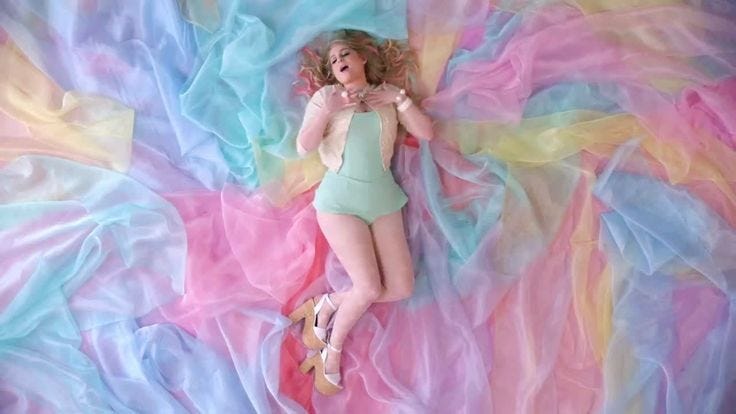
    In March of 2017, American Vogue had its first ever plus-size model on the cover. We began to see artists like Meghan Trainer and Lizzo embrace their curves and show confidence in realistic body types, a step forward in healing from the toxic standards of the early 2000s.

    Flash forward to 2026, it seems like we’ve been going in the opposite direction with hundreds of celebrities and social media influencers using GLP-1 and weight-loss drugs like Ozempic (semaglutide) or Mounjaro (tirzepatide) purely for aesthetic purposes and proudly stating so all around the media. Is this public craze for tiny bodies the start of a movement focused on promoting disordered eating and disordered “health” goals? How does this affect our highly impressionable youth?

    According to the National Library of Medicine on the 2020 study of The Relationship Between Social Media Use and Disordered Eating in Young Adolescents, disordered eating patterns were reported within 51.7% of girls and 45.0% of boys, with strict exercise and meal skipping the most common trends across posts.

    In the Passive Social Networking Sites Use and Disordered Eating Behaviors in Adolescents [...] study conducted by Kangqiao Xiang and Fanchang Kong in 2024, they found girls had significantly higher levels of social media use, “body dissatisfaction, and DE behaviors than boys”. In this 2024 study, it states “the chain mediating effects of upward social comparison and body dissatisfaction between passive SNS use and DE behaviors were found only among adolescent girls.”

    I’ve noticed on social media sites, particularly on mobile applications like TikTok, X (formerly known as Twitter), and Instagram, that on my “Home Feed” I am being fed toxic content based around appearance and body image when I hardly ever interact with posts as such.

    Everywhere online, whether on short-form video content sites including TikTok and Instagram or YouTube, people are rushing to talk about their concerns in the current wave of thinness as a beauty trend, talking about celebrities and social media influencers use of weight-loss drugs and the effects it has and will have continue to have on society.

    In a video titled The Race To Be The “Skinniest” Is Back… And We’re All Dying To Win by Salem Tovar (@_salemtovar_ on YouTube), a video essay creator focused on discussing the latest trends, she talks about her concerns with the public's newest obsession — even going as far to say “This has gone past the glorification of being thin. At this point, it is the glorification of slowly withering away.”

    This trend of insane thinness is no longer just skinny; it is sick. These women look ill. I don’t believe I have to explain just how bad this is or why it is harmful to everyone involved and witnessing this plague — everyone should already know — but I will remind you anyway.

    The continuation of this trend will not only have lasting effects that are more than definitely fatal on these skeleton-esque bodies but also encourage younger and younger people to join in, including pre-pubescent children if they haven’t already. Poor body image has always been an issue girls faced — going as young as 4-5 years old, I’d say. If this goes on, no doubt children will grow up with disordered eating habits trying to mimic their peers’, sisters’, and mothers’ bodies. We’ve already seen the harm on adolescents when it comes to just seeing videos promoting Pro-Anorexia ideologies, and it is only getting worse now.

    It is no coincidence that right as women begin to show up physically smaller in America there is an evident push to make them smaller metaphorically as well — taking away our rights in a way that reminds us in a screaming voice that the Equal Rights Amendment is not recognized as part of the US Constitution.

    Despite the feeling of doom this trend gives us, there are solutions that you can help with. Instead of interacting with posts that promote pro-thin ideas, interact and share posts that encourage body positivity and anti-shame around real bodies. Rewire your own mindset regarding your body — rather than pointing out your “flaws”, remind yourself of what your body does for you: your feet get you from place to place, your bum protects your tailbone when you sit or fall, your belly protects your inner organs, etc. The change in your own views will further help others view their bodies as just as valuable and beautiful and maybe — just maybe — stop this deathly craze in its tracks.

Friday, March 13, 2026

Riot GRRRL


READ THE FULL ISSUE AND VIEW THE FULL ZINE HERE

This Issue Features:

  • HISTORY ON RIOT GRRRL
  • RIOT GRRRL MANIFESTO
  • RECOMMENDED ALBUMS
  • UPCOMING EVENTS

Special Thanks To:

My mom for always believing in me and pushing me to do hard things & Tonia for supporting my craft.

"Because I believe with my wholeheartmindbody that girls constitute a revolutionary soul force that can and will change the world for real." (Riot Grrrl Manifesto, Bikini Kill Zine 2, 1991)

    With the sticky sweet taste of ice cream and soft cookies on my tongue, I remember eagerly sitting at my family's kitchen table— the same table we've had for years; eating and laughing, crying and crafting, reading tarot cards and playing board games there— while my mom set down a gift bag for me to open. Thinking back now, I can't even remember all that I got for my birthday that year— the big 11. Just these 6 things, 6 CDs that changed my life forever.

    It was warm, sun shining golden on my skin through the windows— late July. My mom was saying with a smile, "Open it! Open it!" My hands tore hungrily at tissue paper to find hard, flat plastic. 6 albums that rocked my world.

  1. Hole's "Live Through This"
  1. PJ Harvey's "Rid Of Me"
  1. The Breeder's "Cannon Ball"
  1. Veruca Salt's "American Thighs"

But most importantly, Bikini Kill's "The CD Version of the First Two Records" and Sleater Kinney's "Dig Me Out."

My introduction to Riot Grrrl, my introduction to a brand new perspective.

What the hell is Riot GRRRL?

Riot Grrrl began in the early 1990's as a movement— a DIY feminist punk movement— in the pacific northwest by a group of young women as response to the sexism they faced, not only in their local hardcore punk scenes, but in their everyday lived-in experiences.

Why is Riot GRRRL important in 2026?

The world right now, especially with the new rise of conservatism and purity culture in popular media– especially on social media sites like TikTok and Instagram– needs Riot Grrrl and all its radical feminist ideology. Riot Grrrl pushes boundaries and promotes female empowerment; a concept that is slowly being flushed out by the new era of “Returning to Conformity” and stay-at-home ‘trad-wives’ becoming an increasingly more popular trend. Riot Grrrl isn’t just female empowerment, though, it’s about women’s independence and rights.

Not only that, but Riot Grrrl discusses and explores “taboo” and heavy subjects, such as incest, rape and rape culture, eating disorders, homophobia, gender inequality, and domestic abuse. These are all topics that have been hushed and silenced from acknowledgement in our society. Although we’ve seen some progress in the last 30 some years that has brought these subjects to light, I feel as though recently it’s begun to be dulled again. Perhaps, it’s on par with the recent trends of traditionalism in Gen Z (a generation that has prided itself on progressiveness and liberalism) or maybe, because of the wild amount of word censoring on social media— using substitutes to cover words that are “triggering”, like saying ‘grape’ instead of rape or ‘unalived’ instead of killed.

Origins & Context

Riot Grrrl— like stated before— started in the early 1990's when a group of women from Olympia, WA and Washington, D.C. held a collaborative meeting where they discussed their frustrations with the sexism they faced in their local punk scenes— a genre that had been dominated by a particular "macho", hardcore type of men. In 'A Little Too Ironic [...]', Schilt talks about how these women decided they wanted to start a "girl riot" after seeing the recent antiracist riots in D.C.

"The name "Riot Grrrl" emerged. The use of the word "girl" came from a desire to focus on childhood, a time when girls have the strongest self-esteem and belief in themselves" (Rock She Wrote: Women Write About Rock, Pop and Rap Emily White, 1995)

Many women in the Riot Grrrl scene would go on to credit female musicians and female fronted bands like The Slits, The Raincoats, Siouxsie And The Banshees, Joan Jett, and most notably, X-Ray Spex for inspiring their sound and ideas.

Riot Grrrl became a precursor to third-wave feminism, however, they took their activism in a different approach than just marches in the streets.
With keeping their operations small and in their own hands, they were able to keep talking about the things they knew needed to be talked about. To find a zine, you almost have to search for it— it wasn't everywhere, plastered in your face. Riot Grrrl was never mainstream for a reason. The reward for seeking out Riot Grrrl was this community of hard working, outspoken women who wanted people like you and I in their communities. The small production of their craft— whether that be fanzines, art, poems, spoken word, music, etc.— is what allowed the Riot Grrrl scene to grow.

Riot Grrrl used a plethora of methods to address and publicize— in small quantities, of course— their message. For example, many groups used fanzines, like the one you're reading right now, to illustrate the problems they were faced with, but also on what Riot Grrrl meant to them.

Women in the scene encouraged the expansion of the meaning of Riot Grrrl. There was no concrete definition for Riot Grrrl and what it could be, look, or sound like. These women did not want Riot Grrrl to become the same cookie-cutter fiasco as they'd seen with the commercialization of punk rock. That's why they didn't mass publicize.

Riot Grrrl was at its core anti-consumerist and anti-capitalist. They rebelled against the notion of buying into trends and meeting the standards of what a women should be, look, and act like.

Style and Resistance

Participants in the Riot Grrrl subculture intentionally wore "girly" items like bows, glitter, barrettes, and dresses as a way to reclaim their femininity. In "Rock She Wrote:[...]" White had written that the women in Riot Grrrl decided to focus and display what girlhood meant to them as a way to not only push barriers in what women should present as, but to also return to a "time when girls have the strongest self-esteem and belief in themselves" (White, 1995).

D.I.Y. was quintessential to Riot Grrrl. As mentioned earlier, the Riot Grrrl movement was critically anti-consumerist, so D.I.Y. didn't just apply for their methods of publishing, it also was used for their fashion and presentation. It was intentionally "messy", tying back to it's roots in the 1970's punk movement— where most punks had little to no money, D.I.Y. was essential to their lifestyles.

On the topic of punk, Riot Grrrl was directly pulled from the subculture. Even though risen as a resistance to the mentality that punk was just for men, they used the same techniques and shared base-line ideas; anti-authoritarian and anti-establishment. Many people would go on to call Riot Grrrl "girl punk", however, women in the scene would argue that Riot Grrrl is it's entirely own thing, separate from punk despite acknowledging it's roots in the punk movement. Riot Grrrl was explicitly feminist and female-led, encouraging and fighting for women in the front and center— as coined by Kathleen Hanna, "Girls To The Front". Punk was almost the exact opposite of that mentality, as women were often used as coat hangers in venues and forced behind the crowd.

In response to things women heard time and time again throughout their lives, the hyper-sexualization and objectification of women, they reclaimed words like "Slut", "Whore", and "Bitch", often writing those words over their skin on their arms, legs, and stomachs as a protest against female-hate.

In 'A Little Too Ironic [...]', Schilt displays the meaning behind Bikini Kill's song "Feels Blind", saying how "Kathleen Hanna addresses how society teaches women to hate themselves". It's the same conversation over again, but it's important to say. The media has been and will continue to advertise and push beauty products like electric razors "to get your down-stairs bald!" and 'vaginal health' supplements made from pineapple and toxic chemicals to "make it smell and taste like candy!" (Real quotes from online advertisements). Or the infamous push-up bra, designed to make breasts look 'good' as if it's wrong or bad to have anything other than perky, porn-star boobs.

So many products and procedures to 'fix' and change women's bodies to become society's ideal image of desirability. The perfect woman. Teaching women and young girls their natural bodies are something to fix because it's not attractive is toxic behavior that damages self-esteem and self-worth. It implants harmful thoughts into their minds. Women are taught that we must look a certain way in order to be deemed as beautiful and valuable.

Society's image of desirability does not include black women. Racism became a constant factor in alternative subcultures, not excluding Riot Grrrl in the mix. Alison Wolfe of Bratmobile discusses the inherent whiteness of the Riot Grrrl movement in the song "Polaroid Baby". Schilt, in 'A Little Too Ironic [...]', explores Wolfe's address to the advantage of being white and "suggests that people need to address that advantage and do what they can to minimize it". Although Riot Grrrl aimed to be anti-racist and intersectional, it was led predominantly by white, middle class women— leading to understandable criticism of the lack of diversity in the scene and exclusion of the experiences of marginalized groups of people. Years after the movement had initially ended, many women who were involved in the Riot Grrrl scene would acknowledge this ignorance and failure to sufficiently address race, including popular Riot Grrrl figure, Kathleen Hanna.

As a white woman myself, I feel inadequate to fully speak on this matter. I recommend the Community Unity Network for Transformation & Solidarity [CUNTS] article "Sista Grrrl Riots", as CUNTS talk about the racism and silencing of BIPOC people in the Riot Grrrl scene far better than I could have. I encourage anyone reading this zine to do research of their own, as well. You can find the link to that article here.

Press and Reaction

The reaction to the Riot Grrrl movement by journalists and press was largely condescending; more times than not, they were hyper-critical, sensationalized, and misrepresenting of the D.I.Y. feminist punk collective.

Reporters didn't take the Riot Grrrl movement seriously because they saw the girls' anger as a 'hissy fit'. The anger and truth of what women in the subculture were talking about exposed the reporters and men in media industries, putting them in a place where they felt involuntarily vulnerable— a space that men have been putting women in for centuries through sexualization and degradation— and instead of listening to the words Riot Grrrls wrote and spoke, they projected their embarrassment into hate.

The Evolution

By the mid 1990s, the Riot Grrrl movement began to dissolve, due to factors like the mainstream media scrutiny and bands falling apart or moving on. Despite the short run time of this countercultural movement, the impact was persistent on everyday media and culture; as the term "Girl Power" became more and more popularized, especially by groups like the Spice Girls.

In the digital age, the Riot Grrrl movement has reemerged though social media and become a popular source of discussion. Modern bands like Mommy Long Legs, Cheap Perfume, and Dream Wife take up the aesthetics and messages that Riot Grrrl left behind and thus starting a new generation of feminist punk-rockers.

Although I doubt Riot Grrrl will ever come back quite like it was in the '90s, seeing current bands executing the same raw energy and power that Bikini Kill, Bratmobile, Heavens To Betsy, and so on did 30 some years ago has brought me hope for our current generation.


Thank You!

Thank you for taking the time to read my blog! If you enjoyed it, please consider leaving a comment and/or giving me a follow! I usually upload monthly :-) Stay tuned...