Over the past couple of years, especially since the COVID-19 pandemic, the public desire for thin bodies has increased more than we’ve seen in a long time, all the while the Body Positivity and Body Neutrality movement has decreased at the same concerning pace. While there has always been a push for the idea of “Thin is Good” on women’s bodies, an ongoing trend that’s lasted lifetimes — going as far back as the late 18th Century when slender figures became the ideal — we saw in the mid to late 2010s a push for change.
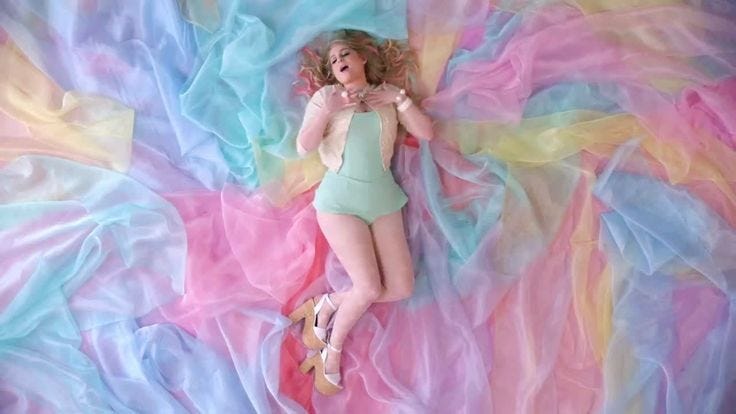
In March of 2017, American Vogue had its first ever plus-size model on the cover. We began to see artists like Meghan Trainer and Lizzo embrace their curves and show confidence in realistic body types, a step forward in healing from the toxic standards of the early 2000s.
Flash forward to 2026, it seems like we’ve been going in the opposite direction with hundreds of celebrities and social media influencers using GLP-1 and weight-loss drugs like Ozempic (semaglutide) or Mounjaro (tirzepatide) purely for aesthetic purposes and proudly stating so all around the media. Is this public craze for tiny bodies the start of a movement focused on promoting disordered eating and disordered “health” goals? How does this affect our highly impressionable youth?
According to the National Library of Medicine on the 2020 study of The Relationship Between Social Media Use and Disordered Eating in Young Adolescents, disordered eating patterns were reported within 51.7% of girls and 45.0% of boys, with strict exercise and meal skipping the most common trends across posts.
In the Passive Social Networking Sites Use and Disordered Eating Behaviors in Adolescents [...] study conducted by Kangqiao Xiang and Fanchang Kong in 2024, they found girls had significantly higher levels of social media use, “body dissatisfaction, and DE behaviors than boys”. In this 2024 study, it states “the chain mediating effects of upward social comparison and body dissatisfaction between passive SNS use and DE behaviors were found only among adolescent girls.”
I’ve noticed on social media sites, particularly on mobile applications like TikTok, X (formerly known as Twitter), and Instagram, that on my “Home Feed” I am being fed toxic content based around appearance and body image when I hardly ever interact with posts as such.
Everywhere online, whether on short-form video content sites including TikTok and Instagram or YouTube, people are rushing to talk about their concerns in the current wave of thinness as a beauty trend, talking about celebrities and social media influencers use of weight-loss drugs and the effects it has and will have continue to have on society.
In a video titled The Race To Be The “Skinniest” Is Back… And We’re All Dying To Win by Salem Tovar (@_salemtovar_ on YouTube), a video essay creator focused on discussing the latest trends, she talks about her concerns with the public's newest obsession — even going as far to say “This has gone past the glorification of being thin. At this point, it is the glorification of slowly withering away.”
This trend of insane thinness is no longer just skinny; it is sick. These women look ill. I don’t believe I have to explain just how bad this is or why it is harmful to everyone involved and witnessing this plague — everyone should already know — but I will remind you anyway.
The continuation of this trend will not only have lasting effects that are more than definitely fatal on these skeleton-esque bodies but also encourage younger and younger people to join in, including pre-pubescent children if they haven’t already. Poor body image has always been an issue girls faced — going as young as 4-5 years old, I’d say. If this goes on, no doubt children will grow up with disordered eating habits trying to mimic their peers’, sisters’, and mothers’ bodies. We’ve already seen the harm on adolescents when it comes to just seeing videos promoting Pro-Anorexia ideologies, and it is only getting worse now.
It is no coincidence that right as women begin to show up physically smaller in America there is an evident push to make them smaller metaphorically as well — taking away our rights in a way that reminds us in a screaming voice that the Equal Rights Amendment is not recognized as part of the US Constitution.
Despite the feeling of doom this trend gives us, there are solutions that you can help with. Instead of interacting with posts that promote pro-thin ideas, interact and share posts that encourage body positivity and anti-shame around real bodies. Rewire your own mindset regarding your body — rather than pointing out your “flaws”, remind yourself of what your body does for you: your feet get you from place to place, your bum protects your tailbone when you sit or fall, your belly protects your inner organs, etc. The change in your own views will further help others view their bodies as just as valuable and beautiful and maybe — just maybe — stop this deathly craze in its tracks.
SOURCES:Wilksch SM, O'Shea A, Ho P, Byrne S, Wade TD. The relationship between social media use and disordered eating in young adolescents. Int J Eat Disord. 2020 Jan;53(1):96-106. doi: 10.1002/eat.23198. Epub 2019 Dec 3. PMID: 31797420.
Xiang K, Kong F. Passive social networking sites use and disordered eating behaviors in adolescents: The roles of upward social comparison and body dissatisfaction and its sex differences. Appetite. 2024 Jul 1;198:107360. doi: 10.1016/j.appet.2024.107360. Epub 2024 Apr 17. PMID: 38636666.
Nawaz FA, Riaz MMA, Banday NUA, Singh A, Arshad Z, Derby H, Sultan MA. Social media use among adolescents with eating disorders: a double-edged sword. Front Psychiatry. 2024 Feb 9;15:1300182. doi: 10.3389/fpsyt.2024.1300182. PMID: 38404474; PMCID: PMC10884122.

No comments:
Post a Comment